Intercultural Dialogue
Fact-Check and Connect: Fighting Misinformation through Intercultural Dialogue
An interactive session organised by YRCI during ALForum 2025, bringing together participants from across the Euro-Mediterranean region to examine misinformation, strengthen media literacy and promote intercultural dialogue, critical thinking and digital resilience.
The story
Misinformation is more than a digital problem. Its influence is closely connected to language, culture, trust, fear and the social realities in which information is received. “Fact-Check & Connect” was developed to create an inclusive space where young people and civil society representatives could examine false narratives through both a media-literacy and intercultural perspective.
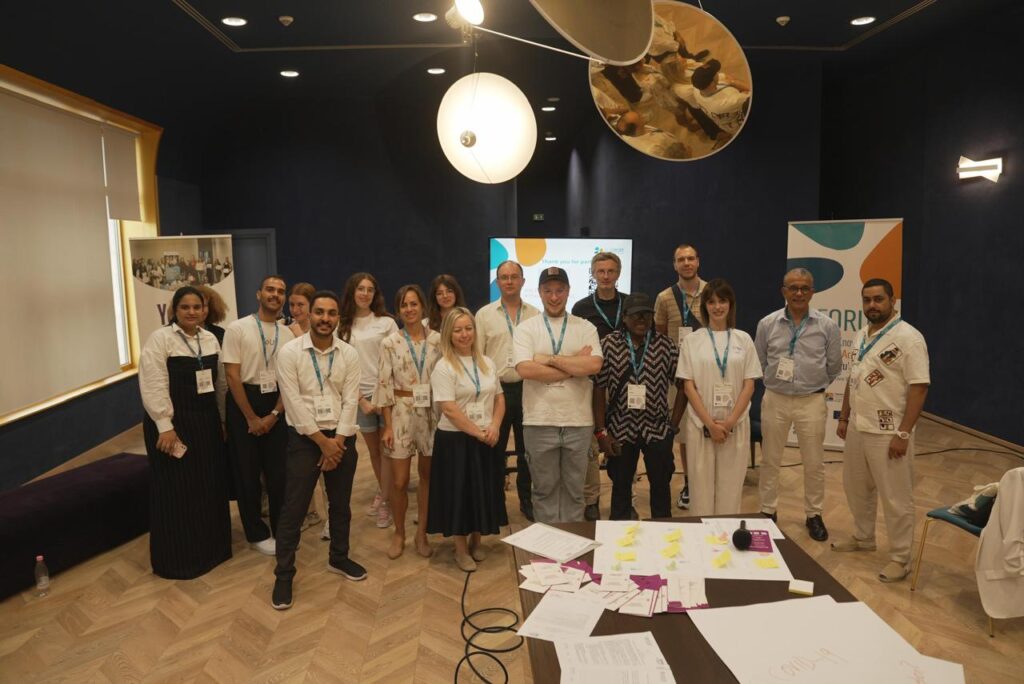
On 18 June 2025, YRCI delivered a creative parallel session during ALForum 2025 in Tirana. More than 25 participants from across the Euro-Mediterranean region took part in quizzes, intercultural case studies, fact-checking exercises, a youth panel and the creation of a Fact-Check Wall. The session was moderated by Eliona Gremi and Agim Gremi, while Jona Anastasi, Juna Elezi and Oligerta Laci shared youth perspectives and community experiences related to misinformation.
The activity demonstrated that responding to misinformation requires more than technical fact-checking. Participants learned to consider the cultural and emotional contexts that make false information believable, while developing more inclusive and responsible responses. The session strengthened critical thinking, digital resilience and intercultural understanding and created new connections that continued beyond the activity.
Objectives
- Increase participants’ ability to identify misinformation and manipulated content.
- Strengthen critical thinking, media literacy and source-verification skills.
- Explore how culture, language, fear, trust and social context influence misinformation.
- Promote intercultural dialogue among participants from different Euro-Mediterranean backgrounds.
- Encourage young people to share their experiences of misinformation in their communities.
- Develop inclusive responses and counter-narratives to misleading information.
- Increase awareness of online hate speech, manipulated videos, election hoaxes and health-related myths.
- Promote digital resilience and responsible engagement with online information.
- Encourage participants to support truth, critical thinking and intercultural listening in their communities.
Target groups
- Young people and youth leaders
- Civil society representatives
- Media-literacy practitioners
- Journalists and communication professionals
- Youth activists and human rights advocates
- Educators and non-formal learning practitioners
- ALForum 2025 participants
- Representatives from Euro-Mediterranean countries
- People interested in fact-checking, intercultural dialogue and digital resilience
Activities
- “True or Fake?” interactive opening quiz
- Presentation on misinformation as a digital, social and cultural challenge
- Intercultural group work and practical case-study analysis
- Analysis of COVID-19 myths, election hoaxes, hate speech and manipulated videos
- Source verification and fact-checking exercises
- Youth Panel Exchange with three young speakers
- Sharing of personal and community experiences related to misinformation
- Creation of an interactive Fact-Check Wall
- Open dialogue on cultural bias and digital resilience
- Development of corrected facts and inclusive counter-narratives
- Collective community pledge promoting truth, critical thinking and intercultural listening
- Reflection, documentation and evaluation of the activity
Results
- More than 25 participants from different Euro-Mediterranean countries took part.
- One 75-minute interactive parallel session was delivered during ALForum 2025.
- A five-member YRCI activity team implemented the session.
- Two moderators guided the session and intercultural group work.
- Three young speakers participated in the Youth Panel Exchange.
- Four major forms of misinformation were examined through practical case studies.
- One interactive Fact-Check Wall was created by participants.
- One collective community pledge was co-written.
- Participants analysed false claims, verified information and developed corrected facts and counter-narratives.
- New intercultural connections were created among participants from different countries and professional backgrounds.
- Participants strengthened their critical-thinking, fact-checking, media-literacy and digital-resilience skills.
- The activity generated photo documentation, an attendance record and a final implementation report.